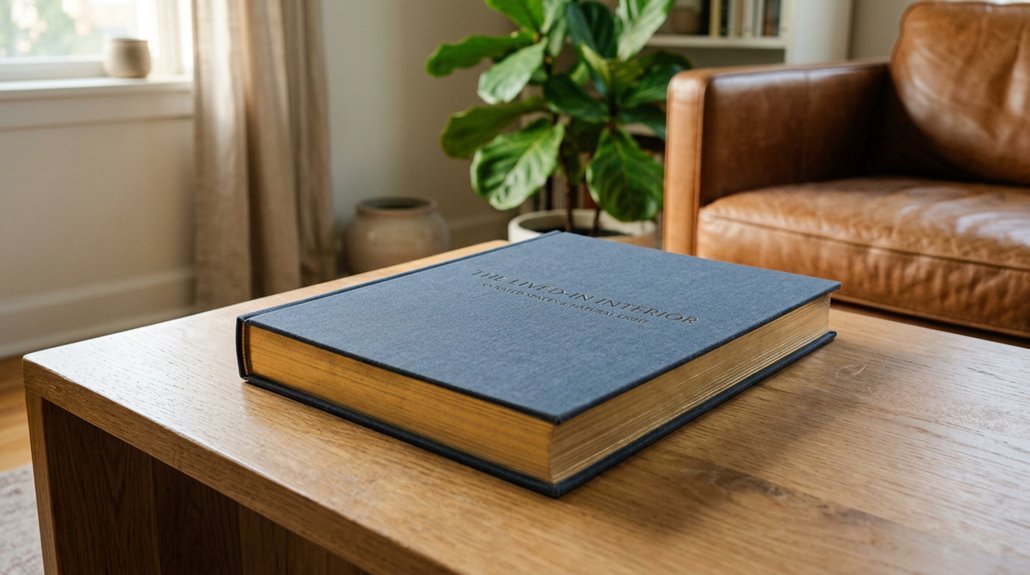
Most coffee table books fail because they’re too big to actually use. You’ll want to stick to roughly 10×13 inches and about 250 pages; anything larger becomes a hassle to lift, and anything smaller looks cheap on your shelf.
Your book should blend with a three-tone color scheme and offer texture through jacketed or bare covers. Mix genres like travel, art, and fashion to keep the eye moving. Hunt estate sales and standout publishers for real finds.
Follow the 60/40 rule, leaving space for objects and conversation. The right book does more than sit there, but choosing wrong means you’ve bought an expensive paperweight, and here’s why that matters more than you think.
Finding the Right-Sized Coffee Table Books
How do you know when a coffee table book fits your space? You’ll want right-sized coffee table books that don’t overwhelm your display surface. The standard 10×13 inches with 250 pages hits a sweet spot: substantial enough to matter, restrained enough to leave room for living.
You’ll achieve height balance by stacking three books around four inches tall on smaller tables, or four books near five-and-a-half inches for anchoring larger surfaces. Leave space for a small decorative object atop your stack.
For a mix of formats, pair that 10×13 inch anchor with a medium companion and a compact third. You’re not cluttering, you’re curating. Your 60/40 rule keeps 60 percent of the table usable, 40 percent devoted to display, so your surface works as furniture, not just a shelf.
Recommended Products

Elevated Aesthetic in Three Sizes: Add a sophisticated touch to your home with this set of three decorative book boxes: Small (8"), Medium (10.2"), and Large (13"). Featuring city-themed covers for London, New York, and Paris, these faux books blend into any modern or farmhouse decor.

The 60/40 Rule for Usable Tables
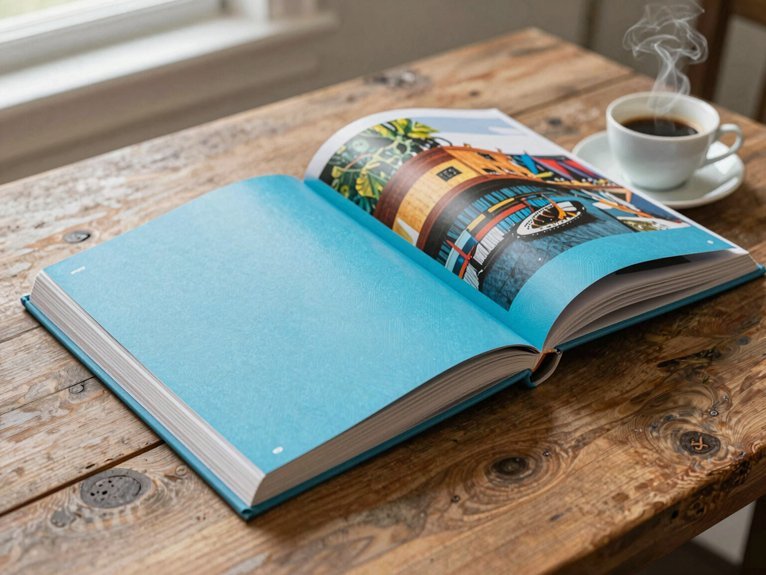
Once you’ve settled on the right-sized books, you’ve got to figure out how many actually belong on your table. Enter the 60/40 rule: you’re aiming for roughly 60% coffee table books and 40% usable table surface. This isn’t arbitrary space planning; it keeps your table functional for drinks, remotes, and daily life.
On a 48-inch round table, that means capping your book footprint around 1,086 square inches. Unlike bookshelves, which run 70/30, coffee tables prioritize accessibility. Push past that 60% threshold and you’ll lose table balance, plus you’ll struggle to actually use the surface.
Smart table top styling demands breathing room. Leave enough surface area for decorative objects and practical items. Nail this ratio, and you’ve got both visual appeal and real-world function locked down.
Recommended Products

![Proud Patriots 250 Years of American History: America's 250th Anniversary Coffee Table Book (200 Pages) [Hardcover] Andrew Prescott](https://m.media-amazon.com/images/I/51PtLeiXZeL._SL500_.jpg)

NEUTRAL HOME DECOR – Our premium decorative books for coffee table decor set feature neutral color tones like white and gray to blend in seamlessly with your existing aesthetic room decor. Perfect for subtle styling for that modern home decor finish.
Build a Three-Tone Color Palette
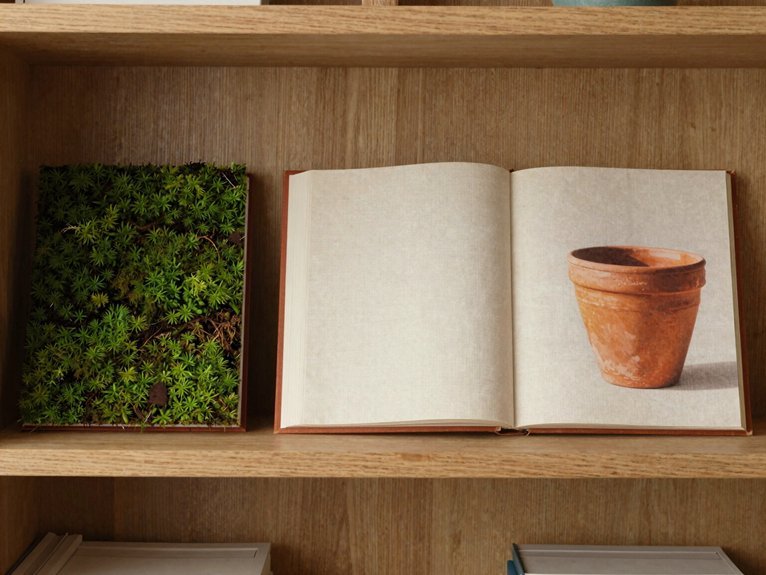
Why let a rainbow of spines fight for attention when you’re curating your coffee table? You’re building a three-tone palette that creates instant color cohesion across your display. Pick three dominant tones, cream, burnt orange, and forest green work beautifully, and treat them like a wardrobe of tones for every coffee table book you add.
You’ll achieve serious visual noise reduction by limiting spines to these hues. Mix jackets vs non-jacketed covers to keep texture alive without breaking your palette. When a loud-spined book threatens your scheme, flip it backward and show those creamy page edges instead.
Spread your three dominant tones across stacks and surfaces for true display balance. This approach keeps your collection feeling intentional, not chaotic, and lets individual books shine without competing for attention.
Recommended Products

Transform Your Space: Instantly upgrade your shelves, coffee tables, or nightstands with these stylish decorative books in brown, beige, and khaki tones. Elegant cover designs bring a modern, sophisticated vibe that elevates any room effortlessly.

AUTHENTIC BOOK LOOK: Realistic book-spine styling and printed page-edge details recreate the character of real books from multiple angles. The 3 different sizes add a natural layered look, making these fake books feel more like authentic decorative books than ordinary hollow boxes.

Decorative Books for Home Decor – Elevate Any Space:Enhance your home with this set of 3 decorative books for decor,featuring elegant linen covers and gold foil accents.Perfect as coffee table books decor,bookshelf decor,or entryway table decor,these faux books add a modern,aesthetic touch to any room
Mix Five Subject Genres for Visual Interest
Where do you want your guests’ eyes to land first, and what conversation do you want to spark? You’re curating a cross-genre display that rewards wandering attention.
Layering travel, art, photography, architecture, interiors, and fashion creates visual rhythm through contrasting textures and color palettes. You don’t lock yourself into one narrative; instead, you’re opening multiple doors. A book on Moroccan riads sits beside a street fashion survey, and suddenly your space tells a richer story.
This mix broadens appeal: your design-obsessed friend flips through interiors while your travel buddy bookmarks the photography collection. Genre variety prevents the flat, uniform look of single-subject shelves. You’re building a personal archive where different passions intersect, turning your coffee table into an approachable museum of your own making.
Recommended Products

DURABLE MATERIALS: These stretchable book covers are made with high-quality stretch fabric, give a soft feel and for extra protection, which means that book sleeve will resist fading and tear, and durable enough for many years keeping your book in good condition.
SUPER EASY TO INSTALL - WITHOUT RUINING TEXTBOOKS. Simply stretch our book protectors over the cover of your hardback book, and you're ready to take on the school year! No taping or gluing required - so you can reuse it year after year.

What You Get: Package includes 7 black book covers, can be used for 6”x7”-8.5”x9.5” books
Where to Find Standout Coffee Table Books
How do you separate the coffee table books worth keeping from the ones that’ll warp and fade within a year? You hunt for standout publishers like Phaidon, Taschen, Assouline, and MoMA Store, where $40–$300 buys genuine quality.
You dig through estate sales and thrift stores, those affordable sources where $5–$15 scores vintage gems with real patina. You browse independent bookstores, Strand or Powell’s, for rare titles that big chains ignore.
You check the oversized format, roughly 10×13 inches, and verify the page count hits around 250. You inspect for cohesive cover art that matches your palette. You demand original prints in good condition, skipping flimsy reprints. You build a shelf that actually lasts.