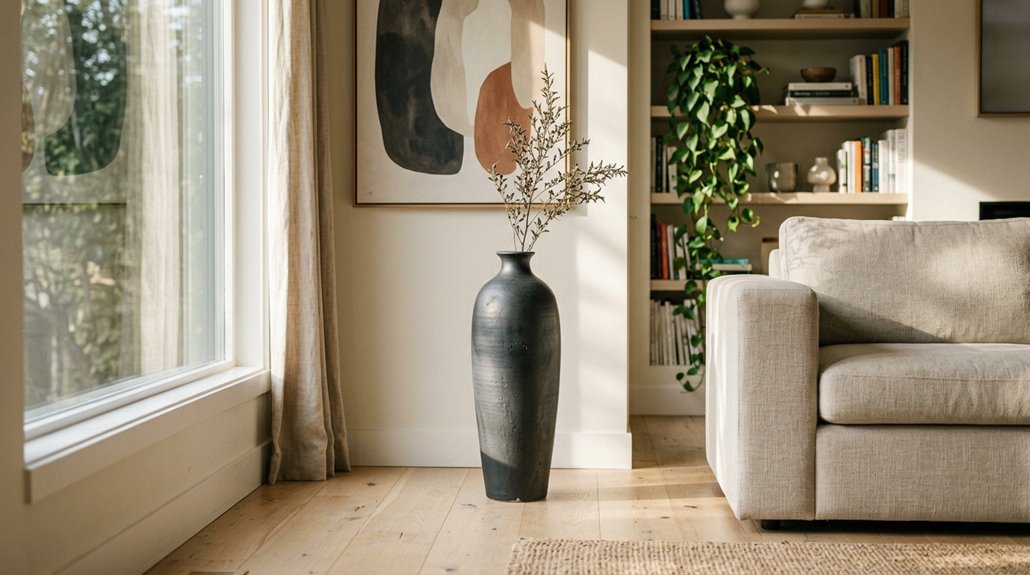
You could spend a lifetime wandering home stores, staring at floor vases that tower over you or crouch like embarrassed dwarfs, and still never grasp why some look magnificent while others ruin entire rooms.
The truth is simpler than you’d think: height isn’t just a measurement, it’s the difference between a statement piece and an expensive mistake you’ll hide behind a chair.
The Best Floor Vase Height for Standard Ceilings
Where do you even start when you’re staring at a wall of floor vases and your ceiling’s just a regular eight feet high? You grab a 30 to 36 inch vase and call it a day. That’s your sweet spot for standard ceiling height, no guesswork needed.
You want proportional balance, right? Your vase should hit roughly one-third to one-half of nearby vertical elements so you don’t block sightlines across the room. If you’re playing it safe with typical furnishings and moderate ceiling height, 30–36 inches remains your most versatile pick.
Prefer something quieter? You can drop to 24–30 inches for a more subtle presence. Just don’t go towering unless you’ve got the space to back it up.
Recommended Products

ELEVATE YOUR MODERN SPACE - Make a striking statement with this contemporary hourglass design. The elegant curves and dark finish create an eye-catching standalone sculpture that seamlessly upgrades any living room or entryway

FULL MIRROR DESIGN: This simple but elegant home decoration tall vase features a HD mirrored glass finish throughout.Floor vases decorative tall is not intended to hold water.

Hand-Woven Rattan Craftsmanship: Meticulously handcrafted by skilled artisans, this PVC rattan floor vase captures the authentic look and texture of natural rattan. Unique weaving variations add rustic charm to your space, so you can enjoy the beauty of natural rattan without worrying about it breaking easily.
Floor Vase Height by Ceiling Height: Quick Reference
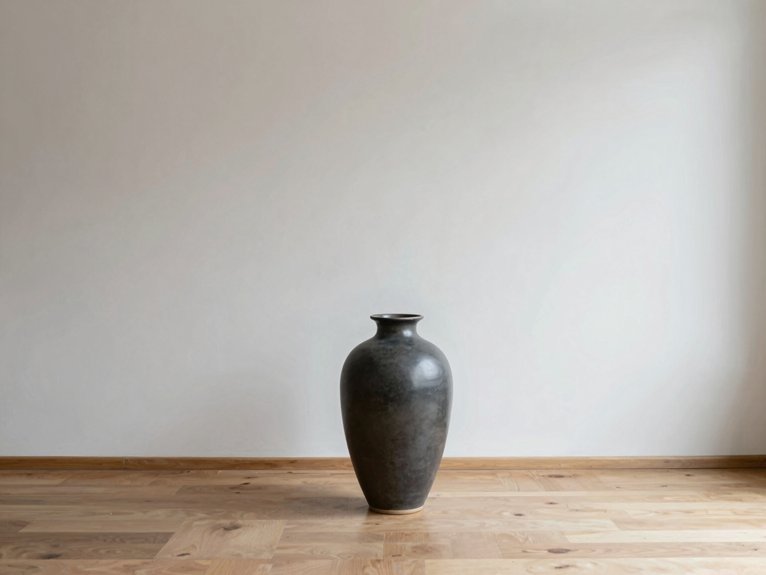
So you’re standing in the store with a tape measure in your pocket, wondering which height actually makes sense for your space. Here’s your quick cheat sheet for matching floor vase to ceiling height without overthinking it.
Standard 8-Foot Ceilings
Grab a 30 to 36 inch floor vase. It’s tall enough to command attention but won’t scrape your fixtures.
Elevated Ceilings (9–10 feet)
Scale up to 36 to 48 inches. Anything shorter gets visually swallowed.
High Ceilings (11+ feet)
Go bold with 48 to 60 inch floor vases. You need that vertical mass to hold your eye.
Small Rooms
Even with standard ceiling height, stick to 24 to 30 inches with slim profiles. You’ll avoid crowding without sacrificing style.
Pro Tip: Keep your floor vase roughly one-third to one-half the height of nearby vertical elements like windows or bookcases. This maintains balanced sightlines and prevents your space from feeling off-kilter.
Recommended Products

PRODUCT: Hosley's 24'' High White Metal Bottle Vase
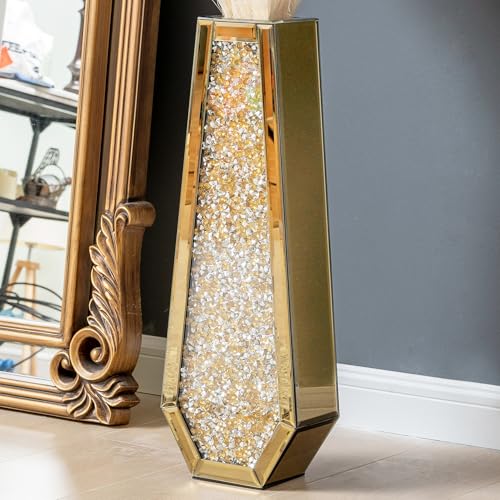
Elegant Gold Decor: This gold floor vase adds sophistication and style to your home decor with its unique mirrored glass and crushed diamond design. Use this silver vase to brighten up your living space

BOHEMIAN THEME Designed with a free-spirited charm where vibrant hues, eye-catching patterns, and whimsical accents transform your space and showcase your personality
How to Match Floor Vase Height to Your Furniture
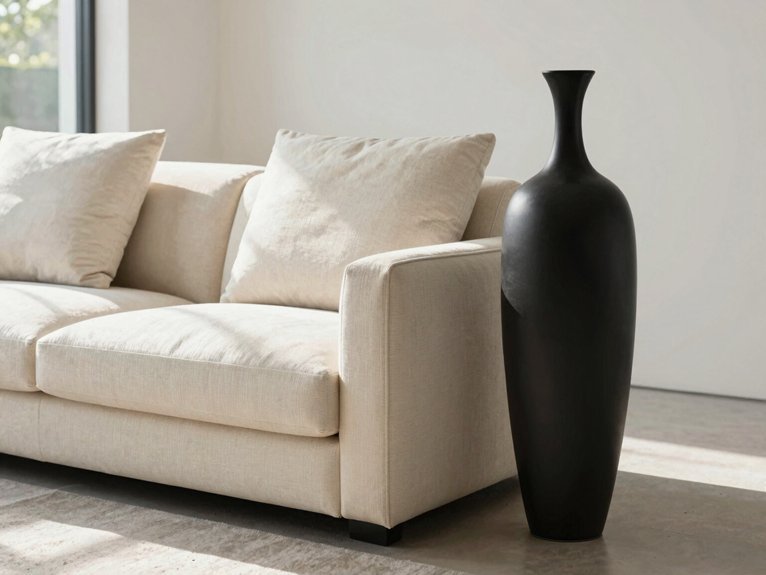
Ceiling height sets your upper limit, but your furniture determines where a floor vase actually lives in your space. You will want to match your vase height to your furniture height using a simple ratio: aim for one-third to one-half the height of nearby vertical elements like bookcases or window frames. This keeps sightlines clean and balanced.
When you place a vase beside a sofa or console, keep it under two-thirds of that furniture height so you do not crowd the vertical plane. For living rooms, you will typically find 24–48 inches works well. Remember, empty floor vases read as sculpture, but when you fill them, choose taller stems to maintain that same proportional silhouette. Two vases create symmetry; one tall vase anchors an asymmetrical layout with confidence.
Recommended Products

Unique Rustic Floor Vase: The vintage white color and granular surface of the tall floor vase combine to showcase a distinct rustic charm; Vintage white finish with subtle pink undertones; Meticulously crafted with an eroded texture, each large vase features subtle variations, making it a unique decorative piece exclusively for you

Handcrafted Vase Decor: The tall vase for floor has a natural wood grain textured with a neutral whitewashed finish, blending seamlessly with various styles like boho, modern farmhouse, rustic, earthy, even organic. Perfect for placing in every corner of your home to create a touch of timeless elegance

【GRADUATED SIZES & LUXE HONEYCOMB TEXTURE】This set features three staggered heights (27", 20.8", and 15.7") with wide mouths (up to 6.3") to fit lush arrangements. The unique 3D honeycomb texture is elevated by hand-painted gold accents on the edges, adding a sophisticated shimmer, turning this big vases for decor living room floor into a real eye-catcher.
Pick Floor Vase Height for Your Specific Room
How do you make sure your floor vase feels right at home? You match the floor vase height to your specific space for visual balance that clicks instantly.
In your living room, grab something between 24 and 48 inches. Got high ceilings or sprawling square footage? Go taller. Your entryway deserves a 30 to 40 inch piece that greets guests with vertical punch. Living room corners swallow up 36 to 48 inch pieces beautifully, filling that awkward void without blocking your view. Bedrooms need restraint: 24 to 30 inches keeps things comfortable, not clumsy.
Here’s your secret weapon: pick a vase roughly one-third to one-half the height of whatever vertical element sits nearby, like that window frame or bookcase. This ratio locks in proper sightlines and prevents your statement piece from becoming a stumbling block.
Recommended Products

Tall Floor Vase: This ceramic vase measures 29 inches/73.5 cm in height, with a mouth diameter of 3.54 inches/9 cm and a maximum body width of 5.9 inches/15 cm. Suitable for use with pampas grass, branches, dried flowers, and even without a flower arrangement, it can be used as a home decoration. The vase can hold water for fresh flowers

Elegant Metal Construction - Crafted from durable metal with a beautiful white wash finish and intricate embossed detailing for a sophisticated look

【DECORATIVE LARGE FLOOR VASE】Whether you use it to create a dramatic centerpiece or simply as a standalone decorative element, this wooden floor vase is a versatile and timeless addition to any home or office. Its unique design and natural materials make it an excellent choice for anyone who appreciates the beauty of nature and wants to bring a touch of the outdoors inside
Why Base Width Matters for Floor Vase Stability
Why does a gorgeous floor vase end up as a shattered mess on your tile? You’ve ignored base width, that’s why. For real stability, you need a minimum base width of 10 to 14 inches supporting any vertical height. Skip this, and you’re begging for disaster.
Here’s the physics you can’t argue with: keep your height-to-base ratio at 4:1 or less. Taller than that, and you’re balancing a skyscraper on a soda can.
You can improve stability with a weighted base or added ballast inside, especially for top-heavy designs. In high-traffic areas, add felt pads underneath, and line the interior if you’re using water. Also, keep total vase height below two-thirds of ceiling height when arranging tall branches so sightlines stay clear and your setup stays planted where it belongs.
Recommended Products

Friendly Reminder: Please respect the copyright of all vases for sale by Sziqiqi, as they are original works!

Pet-Friendly Floor Vases: Enigmatic black finish features coarse grain texture, showcasing distinct tactile details. Sziqiqi black floor vase is crafted from heavy-gauge metal, making it shatter-resistant and durable; It's an ideal choice for home with pets or children; And the non-slip pads on the base help prevent sliding while protecting your furniture from scratches

Elegant Tall Floor Vase: Introduce striking modern home decor with this 26-inch high metal floor vase, perfect for creating a sophisticated focal point.
When to Fill Your Floor Vase: and When to Leave It Empty
You’ll need to weigh visual impact decisions against your room’s existing clutter before choosing whether to fill your floor vase or let it stand alone as a minimalist statement. When you do add filler, aim for stems that reach 1.5 to 2 times the vase height so you don’t throw off the proportions you carefully selected.
Trust your gut: if the space feels busy, keep it empty; if it feels flat, add height and texture without overthinking it.
Recommended Products

【Size & Weight – Light Enough to Move, Heavy Enough to Stay】 23.6 inches tall | 5.9 inches longest | 3.9 inches widest | 6.61 lbs. This is not a floor-only vase. It works on tables, consoles, shelves, or the floor. Light enough to lift with one hand, but weighted enough not to tip.
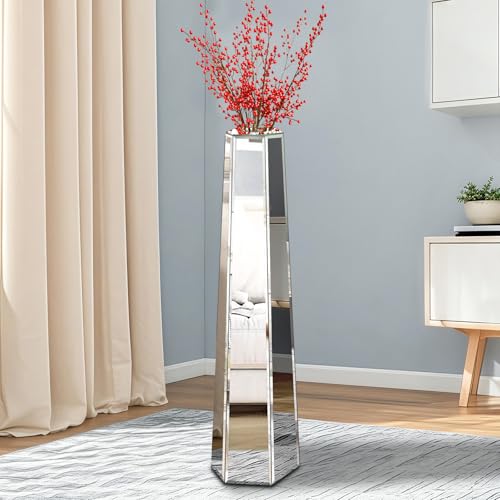
【 Exquisite & Elegant Design 】 This tall floor vase absolutely has an amazing look. The whole vase is covered by mirror, smooth and bright. It can be an excellent complement for home decoration, making your decoration more exquisite and elegant

OVERALL SIZE ‒ This large silver floor vase measures 30 x 10.6 x 5.3 inches.This crystal glass vase cannot be used to hold water, so it is not suitable for real flowers.
Visual Impact Decisions
Whether you’re staging a corner or anchoring an entryway, deciding what goes inside your floor vase, or if anything belongs there at all, shapes the entire mood of your space. Your height and visual impact choices depend on what statement you want to make.
Empty vases at 30–36 inches create minimalist sculptural presence. Slimmer 24–30 inch profiles suit compact rooms without overwhelming. Filled arrangements need 30–48 inch vessels for dramatic effect.
Match vase height to one-third of nearby vertical elements for balance. Keep total height, stems included, under two-thirds ceiling clearance.
You’ll anchor entryways boldly with pampas grass extending 1.5 to 2 times your vase height. For safety, don’t ignore that 10–14 inch base width, or you’ll risk tipping. Choose empty for calm, filled for energy.
Filler Height Harmony
Once you’ve locked in your vase height and visual strategy, you’re faced with a bigger question: what actually goes inside, if anything at all.
Your filler height determines whether your floor vase commands attention or disappears into the background. When you choose pampas grass or tall branches, aim for fillers reaching 1.5 to 2 times your vase height, typically 30–48 inches. This creates proportional balance without overwhelming your space. You’ll want the overall arrangement hitting about 60–100% of the vase height to maintain visual harmony.
Seasonal fillers like dried grasses or pine let you refresh your look while keeping the vase’s statement intact. Skip fillers entirely if you’re after pure sculptural impact, but remember: empty works best at 30–36 inches where the vessel itself becomes the art.
Minimalist Statement Options
Why complicate things when a floor vase can speak for itself? You’ll find that empty vessels often deliver the strongest minimalist statement in modern spaces.
- Choose 30–36 inch heights for neutral, sculptural presence
- Select 24–30 inches when working with compact rooms and slim profiles
- Scale to 30–40 inches for entryways and corners that need anchoring
- Match your floor vase to one-third or one-half of nearby tall elements
- Remember that negative space itself becomes the design feature
When you do fill it, pampas grass or dried stems should extend 1.5 to 2 times your vase’s height. But don’t feel pressured: a well-proportioned empty floor vase eliminates clutter while commanding attention.
Trust your instincts. Sometimes silence carries more weight than decoration, and your space breathes easier for it.
Use the One-Third Rule for Perfect Proportions
How do you know when a floor vase looks right instead of just stuffed in a corner? You follow the one-third rule. This guideline keeps your floor vases at least one-third the height of nearby furniture, maintaining balanced proportions and natural sightlines.
For standard living room pieces around 84 inches long, you’ll want vases between 24–32 inches tall. That’s squarely within the 24–48 inch sweet spot for most spaces. In entryways, aim for 30–40 inches to frame movement without blocking views.
Pairing with a mantel? Match your vase height to one-third or half the vertical element above it, like a window frame or artwork. Got high ceilings? Stretch toward 30–48 inches so your vase doesn’t get swallowed by the architecture. Scale matters. Trust your eyes, but measure twice.
Recommended Products

Luxurious Gold Décor: Bring unmatched elegance to your home with this gold floor vase. The mirrored glass and crushed diamond design add a dazzling touch to any space. Use this large floor vase to elevate the luxury of your home décor.

Black Farmhouse Vase:Qntique vases have a charming and nostalgic look that can add character to a space. The dimpled texture adds richness and style

PRODUCT: Hosley Decorative Embossed Metal Tall Floor Vase 24 Inch High
Adjust Floor Vase Height for Tall Fillers
When you’re working with tall fillers like pampas grass or architectural branches, you’ll need to think carefully about how those extra inches affect your overall composition. You can’t just pick any tall vase and call it good, because the filler itself becomes part of the height equation, and that changes everything from your ceiling clearance to whether the thing will tip over in a light breeze.
Stick to vases between 30 and 48 inches tall, keep your filler at roughly one and a half to double that vase height, and make sure your total height stays under two-thirds of your ceiling. You’ll create visual balance without turning your corner into an obstacle course.
Recommended Products

Quantity and Size: You will get 9 stems of natural high quality extra tall pampas grass with a height of about 46-48 inches and a plume length of about 28-36 inches. You can fill the whole large floor vase or meet the arrangement of two vases at the same time. Bring beauty into your space with these luxurious high quality pampas grass stems

STUNNING STATEMENT PIECE FOR ANY ROOM - This 34 inches handcrafted floor vase transforms living rooms, bedrooms & entryways instantly. Perfect for pampas grass, dried eucalyptus & faux botanicals. Spectacular flanking a fireplace, TV unit, or as a solo accent in a room corner

This tall floor vases for decor is ideal for hallway, next to a fireplace or for living room. This tall skinny vase is a versatile piece that enhances any setting, modern, elegant or rustic
Tall Filler Ratios
Where exactly should your pampas grass stop and your ceiling begin? You need to master tall filler ratios to get this right.
Your vase height determines everything. For pampas grass or tall fillers, you’ll want vessels in the 30–48 inch range. Here’s how you balance the proportions:
Multiply your vase height by 1.5 to 2 times for filler length. Keep total arrangement at one-third to one-half of nearby vertical elements. Select bases measuring 10–14 inches minimum for stability. Maintain a height-to-width ratio no greater than 4:1. Pair 36–60 inch vase heights with high ceilings for architectural balance.
You can’t ignore these numbers. A top-heavy arrangement crashes easily. A stubby filler looks lost. Get the ratio right, and your tall fillers command attention without dominating the room.
Ceiling Clearance Needs
Those ratios you’ve locked down won’t mean much if your pampas grass is brushing the ceiling. You’ll need to prioritize ceiling clearance when selecting your floor vase height, especially with tall fillers that stretch upward.
Stick to 30–48 inch vases in standard rooms with adequate ceilings. This height ratio keeps your arrangement breathing without crowding the overhead space. If you’ve got higher ceilings, push toward 36–60 inches, but double-check that nearby furniture doesn’t block sightlines.
Here’s a solid rule: position your vase at roughly one-third to one-half of vertical elements like windows or bookcases. This prevents visual cramming.
Most importantly, verify that your vase plus filler stays under two-thirds of your ceiling height. You’ll preserve open vertical sightlines and avoid that cramped, top-heavy feeling nobody wants.
Visual Balance Rules
Why does one arrangement command the room while another falls flat? You’ve likely missed the mark on visual balance. Your vase height isn’t just a number; it’s the anchor that ties your space together. When you’re working with tall fillers like pampas grass or dramatic branches, you can’t wing it. You’ve got to think proportions, sightlines, and how your eye travels across the room.
Here’s how you nail it every time:
- Size your vase height at one-third to one-half of nearby vertical elements like windows or bookcases
- Choose 30–48 inch vases for living rooms with tall fillers to create a solid vertical anchor
- Stick to 30–40 inches in entryways for a welcoming but unobtrusive presence
- Select 30–36 inch empty vases as sculptural pieces that keep sightlines clean
- Maintain a 1:1 to 2:1 vase-to-filler ratio so your silhouette stays harmonious
Get this right, and your space finally feels intentional.
Floor Vase Height Mistakes That Ruin Your Room
Because height seems like such a simple choice, you’ll probably grab the tallest vase that catches your eye and hope it works. You shouldn’t. When you ignore proportions, your vase height throws off the entire balance of a room.
You’ll stick a 48-inch statement piece against a low sofa and wonder why it looms like a threat. You’ll crowd narrow hallways with towering cylinders that snag sleeves and collect dust. You’ll choose delicate, top-heavy shapes without weighted bases, then watch them wobble on carpet.
For living rooms, you need 24–48 inches, scaled to your ceiling: higher spaces demand 30–48 inches, while compact rooms suffocate under anything over 36. You forget the one-third to one-half rule, eyeballing against windows and bookcases, creating broken sightlines that fatigue the eye. You’ll skip the 10–14 inch base width, risking tips in traffic.
Empty vessels read as sculpture at 30–36 inches, yet you’ll overfill them, or underfill arrangements, overpowering everything nearby. Height isn’t decoration, it’s math you feel.
Recommended Products

Natural Wood Texture That Warms Your Space: This tall wooden floor vase highlights the natural grain and character of real wood in a soft neutral tone. Subtle variations in wood pattern make every piece naturally unique. It blends effortlessly with boho, rustic farmhouse, and neutral interiors, adding warmth and visual texture to your home

FILL EMPTY CORNERS - Transform living room and entryway spaces with this extra large floor vase, standing 39.38 inches tall to balance standard furniture

【Versatile Ceramic Aesthetic Design】: Our distressed beige metal tall vases for floor feature a timeless cylindrical silhouette with a realistic distressed beige ceramic surface, delivering the elegant rustic charm of pottery. They seamlessly integrate with almost all decor styles, including wabi-sabi, bohemian, modern farmhouse, minimalist, industrial, and coastal styles.
Quick Fixes When Your Floor Vase Is Wrong-Sized
So you’ve already bought the wrong vase, now what? You don’t need to toss it. A few height adjustment tricks can save your floor vase from looking awkward.
Trim the stems or swap in shorter filler if your vase towers too high for the room. Slip in tall branches or elongated dried grasses when you need to stretch a short vessel upward. Pair two vases at different levels to fix scale issues in symmetrical spaces. Shift an overpowering piece beside lower furniture or out of busy walkways. Remember that living rooms typically want floor vase heights between 24 and 48 inches, so tweak your display to hit that visual sweet spot with nearby pieces.
These quick fixes work with what you own, no receipt required.
Recommended Products

Stable Anti-Tip Design: Crafted with a weighted base, Sziqiqi floor vase ensures enhanced center-of-gravity stability. This design prioritizes safety and peace of mind for your home environment. This tall floor vase is safe for families with children and pets, with no need to worry about accidental tipping or breaking

PRODUCT: Hosley's Bamboo Wood Tall Floor Vase.-26" High

【Handmade Rustic Burnt Vases】 Each vase features a one-of-a-kind, hand-forged burnt finish that creates rich, multi-toned textures in earthy bronze, siliver, and metallic accents. This artisanal process ensures no two vases are alike, adding rustic character and depth to your decor