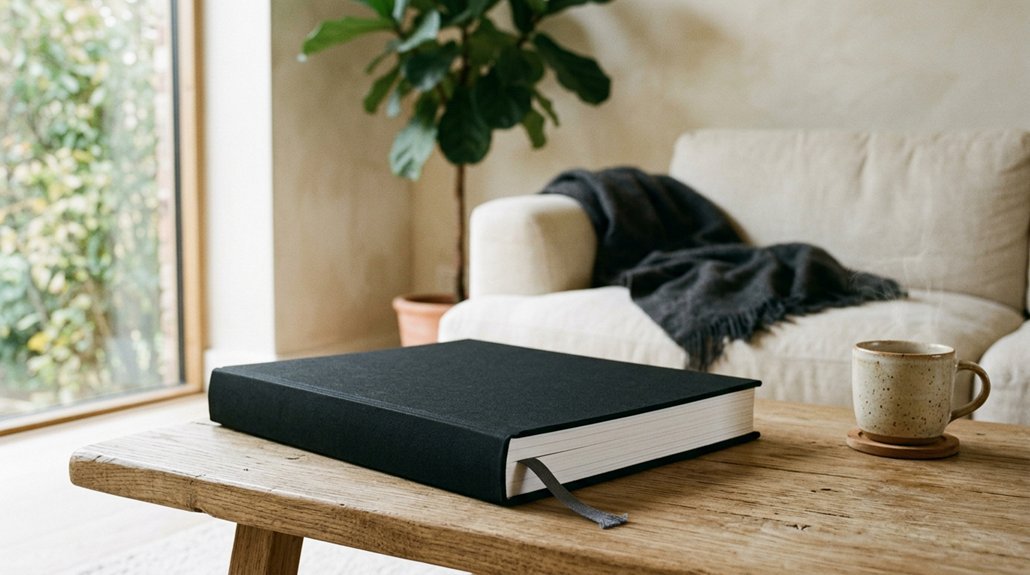
Your living room’s missing something, and it isn’t another throw pillow. These ten black coffee table books bring archival power, cultural weight, and serious shelf appeal to your space.
You’ll find unpublished civil rights photography, five decades of Black television history, and royalty-inspired beauty portraits that start conversations without you saying a word. Each one balances display-worthy design with substance worth actually opening.
Some cost less than dinner out; others demand collector budgets. Here’s how to choose what earns that prime tabletop real estate.
Unseen: Unpublished Black History from the New York Times Photo Archives
Why settle for the same recycled images when you can hold 304 pages of never-before-seen photographs? *Unseen* pulls back the curtain on a century of Black life that the *Times* buried in its vaults, and it’s exactly what you need if you’re tired of coffee table books that feel like homework.
Published by Black Dog & Leventhal in 2017, this hardcover delivers archival photography without the dusty academic vibe. You’ll find Civil Rights protests, everyday moments, and cultural milestones that never made front pages. The 2017 release means some copies show wear, so inspect before buying.
At roughly 304 pages, it’s substantial but not overwhelming. ISBN 9780316552967 helps you locate first editions. Ideal for history buffs who want visual storytelling, not lectures. Skip it if you need contemporary coverage; it stops decades back. For authentic, unfiltered Black American visuals, you won’t find better.
Best For: History enthusiasts and photography lovers seeking authentic, unfiltered visual storytelling of Black American life from the Civil Rights era and earlier decades.
Pros:
- Features never-before-published photographs from the New York Times archives, offering rare and unique historical documentation
- Presents archival content in an accessible, visually engaging format without dry academic tone
- Covers diverse range of subjects including protests, everyday moments, and cultural milestones
Cons:
- 2017 publication date means some copies may show wear and require careful inspection before purchase
- Content stops decades back, offering no contemporary coverage of recent Black history
- Limited to photographic documentation without extensive textual analysis or historical lectures
Aesthetic Decorative Books Set of 2 – Stylish Boxes for Coffee Table Decor
Who needs actual reading material when you’re chasing that shelf aesthetic? ZICOTO’s Aesthetic Decorative Books Set of 2 delivers exactly what you’re after: hollow black-beige boxes that look convincingly real without demanding your time.
You’ll appreciate the two different sizes, 7.87x11x1.57 inches and 7.09×9.84×1.18 inches, which nest together and create genuine depth on your coffee table. The durable cardboard construction won’t impress anyone who picks them up, but that’s the point. They’re display pieces, not library staples.
Here’s where they shine: secret storage. Tuck jewelry, notes, or remote controls inside. The modern lettering and elegant covers transform bland shelves into curated spaces without the clutter of actual reading lists.
Ideal if you’re staging a home, refreshing office decor, or simply tired of dusting unread hardcovers. Skip these if you want functional books. For pure visual impact with practical hidden perks, they’re a smart addition to your 2026 setup.
Best For: Home stagers, office decorators, and anyone prioritizing shelf aesthetics over reading who wants hidden storage in a convincingly book-like display.
Pros:
- Two nesting sizes create authentic depth and realistic book appearance on shelves or tables
- Hollow interior provides discreet storage for small items like jewelry, notes, or remotes
- Modern black-beige color scheme and elegant covers suit contemporary decor styles
Cons:
- Cardboard construction feels cheap if handled or examined closely
- No actual functionality as books—purely decorative with no readable content
- Limited durability compared to genuine hardcovers; not built for frequent opening or moving
In Vogue: Illustrated History of the Famous Fashion Magazine
This book suits you perfectly if you’re a visual learner who wants context with your eye candy, or if you’ve ever wondered how Vogue became the industry’s undisputed authority. Rizzoli’s 444-page hardcover delivers exactly that: a decade-spanning visual archive showing how one magazine shaped global fashion culture.
You’ll flip through iconic covers, editorial spreads, and behind-the-scenes moments that trace Vogue’s evolution from 1892 to present. The illustrated format means you’re not reading dense fashion theory, you’re witnessing history through photography and design.
At 444 pages, it’s substantial enough to anchor your coffee table without overwhelming your space.
The 2012 publication date means you’re missing the last fifteen years of digital transformation and recent cultural shifts. For contemporary coverage, you’ll need supplemental sources. However, for understanding foundational influence and collecting genuine visual artifacts, this remains unmatched.
Consider this if you value heritage over immediacy, or if your aesthetic leans classic rather than cutting-edge. The multicolor printing justifies the hardcover investment.
Skip it if you want current designers or social media-era analysis. At roughly 2.5 pounds, it’s portable enough to actually read, not just display.
Best For: Visual learners and fashion history enthusiasts who want to understand Vogue’s foundational influence through photographic archives rather than contemporary digital-era analysis.
Pros:
- 444-page illustrated format delivers dense visual storytelling through iconic covers, editorial spreads, and behind-the-scenes photography spanning 1892 to 2012
- Substantial hardcover with multicolor printing justifies the investment as both a readable archive and display-worthy coffee table book
- At roughly 2.5 pounds, remains portable enough for actual reading rather than purely decorative display
Cons:
- 2012 publication date excludes the last fifteen years of digital transformation, social media-era analysis, and recent cultural shifts
- No coverage of contemporary designers or current fashion industry developments since original publication
- Requires supplemental sources for anyone seeking understanding of Vogue’s modern evolution and present-day influence
Tom Ford
Tom Ford’s 414-page Rizzoli hardcover demands attention on any surface it touches. You pick it up and feel the weight: 414 pages of SLP edition binding that screams luxury without whispering a word. Published back in 2004, this black hardcover still holds its ground in 2026.
You’re buying more than a book; you’re investing in Ford’s visual manifesto. The ISBN 9780847826698 marks the real deal, not some flimsy reprint. At 414 pages, you get substantial content, though you won’t find daily practical tips here: this is pure aesthetic immersion.
Ideal for you if fashion photography seduces you, or if your living room lacks that one conversation-starting centerpiece. Skip it if you need actionable advice. The 2004 publication date means some references feel dated, but Ford’s sensibility remains razor-sharp.
You place it on your table, and suddenly the whole room elevates. That’s the Tom Ford effect: expensive, unapologetic, and entirely worth it for the right buyer.
Best For: Fashion enthusiasts, photography collectors, and design-conscious individuals seeking a luxury coffee table book that doubles as a visual statement piece and conversation starter.
Pros:
- Iconic oversized black hardcover design that serves as an instant interior design upgrade
- Substantial 414-page volume with high-quality printing befitting Tom Ford’s aesthetic standards
- Collector’s item status with the original 2004 SLP edition commanding lasting value
Cons:
- Lacks practical, actionable advice for readers seeking instructional fashion content
- Dated 2004 publication references that may not resonate with contemporary audiences
Black Hollywood: Reimagining Iconic Movie Moments Coffee Table Book
“Black Hollywood: Reimagining Iconic Movie Moments”
*For the Film Buff Who Wants More Than Pretty Pictures*
—
1. What You Get
“Black Hollywood: Reimagining Iconic Movie Moments” asks why classic cinema rarely centered Black performers, then answers with stunning photographs that rewrite that history. You’ll flip through 240 pages of hardcover brilliance from Sourcebooks, published in 2022, watching contemporary Black artists step into scenes originally denied them. It’s visual correction, not nostalgia.
—
2. Why It Works
This book dominates your coffee table. The 240-page hardcover format feels substantial, built for actual handling, not dust collection.
You’ll notice guests don’t just glance; they stop, question, engage. That makes it a rare hybrid: decorative object and genuine conversation engine.
Sourcebooks delivered tight production values. Images pop with clarity, color grading respects both homage and originality.
—
3. The Reality Check
Let’s be blunt: text stays minimal. You’re buying photographs with brief context, not deep film scholarship. If you want academic analysis, you’ll supplement elsewhere.
The 2022 publication date means some references feel slightly aged by 2026 standards, though the core concept remains urgent.
—
4. Who Should Buy
- Classic Hollywood enthusiasts seeking perspective shifts
- Hosts who value substance-fueled conversation
- Anyone gifting to film lovers who “have everything”
—
5. Skip If
- You need extensive reading material
- Your taste runs strictly abstract or contemporary art
- You dislike political undertones in decorative objects
—
Verdict: Worth the shelf space for specific audiences. Not universal appeal, but memorable impact where it lands.
Best For: Classic Hollywood enthusiasts and hosts who want a visually striking coffee table book that sparks meaningful conversations about representation in cinema.
Pros:
- Stunning photography that powerfully reimagines iconic movie moments through a Black Hollywood lens
- High-quality hardcover production with 240 substantial pages built for handling and display
- Functions as both elegant decorative object and genuine conversation engine for guests
Cons:
- Minimal text depth offers limited film scholarship or academic analysis
- 2022 publication date means some cultural references may feel slightly aged
- Political undertones in decorative format may not appeal to all tastes or spaces
Basquiat
Need a quick art history fix without the textbook slog? Grab Taschen’s Basquiat, a tight 96-page hardcover that won’t overwhelm your shelf or your schedule.
What You’re Getting
This illustrated edition, published 2015, packs Jean-Michel’s explosive energy into a compact format. You’ve got reproductions that pop, biographical context that actually sticks, and none of the academic throat-clearing that kills your buzz.
The Real Talk
At 96 pages, it’s lean, almost too lean if you’re hunting deep analysis. You won’t find exhaustive cataloging of every canvas, and the 2015 date means newer scholarship is missing.
Who Needs This
You’re perfect for this if you’re curious about Basquiat but intimidated by those 500-page monographs. Or if you want something guests can flip through without a lecture. It’s starter material that doesn’t feel dumbed down.
The Verdict
Buy this when you want cultural credibility without the homework. It’s a gateway drug, not a PhD, and that’s exactly the point.
Best For: Art-curious beginners who want an accessible, visually engaging introduction to Basquiat without committing to dense academic texts.
Pros:
- Compact 96-page format makes it approachable and quick to read
- Illustrated reproductions deliver strong visual impact
Cons:
- Too brief for readers seeking deep scholarly analysis
- 2015 publication date omits more recent scholarship
- Lacks exhaustive cataloging of Basquiat’s complete body of work
Black TV: 50 Years of Groundbreaking Television
Want a book that actually explains why your parents won’t stop quoting *Soul Train*? You’ll find your answer in *Black TV: 50 Years of Groundbreaking Television*, a 288-page hardcover from Workman Publishing that dropped December 2023.
This isn’t nostalgia fluff. You’re getting five decades of cultural analysis, from Don Cornelius’s platform shoes to the Johnson family on *Black-ish*. The book tracks how Black creators fought for representation, built audiences, and reshaped American entertainment.
At 288 pages, it’s substantial without overwhelming your coffee table. You’ll appreciate the research depth if you’re studying media or just curious about the shows that defined generations. The photography pops, and the timeline format lets you dip in anywhere.
Ideal for: TV buffs, cultural studies students, anyone whose family debates *The Cosby Show* legacy at Thanksgiving.
Skip if: You want episode guides, not industry history.
Verdict: Worth the shelf space for the context it provides on today’s streaming landscape.
Want a book that actually explains why your parents won’t stop quoting *Soul Train*? You’ll find your answer in *Black TV: 50 Years of Groundbreaking Television*, a 288-page hardcover from Workman Publishing that dropped December 2023.
This isn’t nostalgia fluff. You’re getting five decades of cultural analysis, from Don Cornelius’s platform shoes to the Johnson family on *Black-ish*. The book tracks how Black creators fought for representation, built audiences, and reshaped American entertainment.
At 288 pages, it’s substantial without overwhelming your coffee table. You’ll appreciate the research depth if you’re studying media or just curious about the shows that defined generations. The photography pops, and the timeline format lets you dip in anywhere.
Ideal for: TV buffs, cultural studies students, anyone whose family debates *The Cosby Show* legacy at Thanksgiving.
Skip if: You want episode guides, not industry history.
Verdict: Worth the shelf space for the context it provides on today’s streaming landscape.
Best For: TV history enthusiasts, cultural studies students, and readers seeking deep context on how Black television shaped American entertainment across five decades.
Pros:
- Comprehensive five-decade analysis from *Soul Train* to *Black-ish* with strong research depth
- Accessible timeline format allows readers to dip in anywhere rather than reading cover-to-cover
- Visually engaging photography that complements the cultural and industry history
Cons:
- Not suitable for readers seeking episode-by-episode show guides
- Limited appeal for those uninterested in industry history or cultural analysis
- Coffee table format may feel substantial for casual readers looking for lighter entertainment reading
Chanel: Collections and Creations
You get archival photos, sketches, and close-ups of iconic details: the tweed, the pearls, the interlocking Cs. The illustrated format means you actually want to flip through it, not just display it. At roughly standard coffee table size, it fits most shelves without dominating your living room.
The catch? It’s nearly two decades old, so don’t expect 2020s collections. For current runway coverage, you’ll need something newer. But for understanding Chanel’s DNA, this remains solid.
Casual fans might prefer a used copy. Serious fashion students: worth owning. Everyone else: borrow from the library first.
Best For: Serious fashion students and Chanel collectors seeking to understand the house’s DNA through archival materials, or anyone wanting an illustrated, browseable reference on the brand’s historical collections and iconic design elements.
Pros:
- Rich visual content including archival photos, sketches, and close-ups of signature details like tweed, pearls, and interlocking Cs
- Illustrated format makes it engaging to flip through rather than just display
- First editions hold collector value and the standard coffee table size fits most shelves without overwhelming a space
Cons:
- Published in 2007, so it lacks coverage of collections from the past two decades
- Not ideal for casual fans due to limited availability
- Limited utility for those seeking current runway coverage or up-to-date brand developments
Vanity Fair 100 Years: From the Jazz Age to Our Age
Looking for a coffee table book that’s equal parts history lesson and celebrity time capsule? *Vanity Fair 100 Years* delivers exactly that, packing four and a half decades of cultural moments into 456 glossy pages.
What You’re Getting
This 2013 hardcover from Abrams Books traces the magazine’s evolution from Jazz Age glamour through today’s Hollywood. You’ll flip through iconic portraits, scandalous profiles, and fashion spreads that defined each era.
The illustrated edition feels substantial in your hands, built to survive actual coffee table life.
Who Needs This
You want this if you love celebrity culture with historical weight. Skip it if you prefer art books without text blocks. The photography shines, though some spreads feel crowded with captions.
The Bottom Line
At 456 pages, it’s a commitment, not a quick browse. Perfect for guests who’ll recognize faces across generations.
The binding holds up; the content rewards repeated flipping. You won’t regret the shelf space.
Best For: Pop culture enthusiasts and design-minded hosts who want a visually striking conversation piece that doubles as a century-spanning archive of celebrity photography and magazine history.
Pros:
- Comprehensive visual archive spanning 100 years of cultural moments with iconic portraits and fashion spreads
- Durable hardcover binding and substantial 456-page format built for frequent browsing and coffee table display
- Balances historical depth with accessible celebrity appeal, making it engaging for guests across generations
Cons:
- Text-heavy spreads may disappoint those seeking pure photography or minimal captioning
- 456-page length requires significant time investment rather than casual flipping
- Some page layouts feel visually crowded with overlapping captions and dense content blocks
GLORY: Magical Visions of Black Beauty
You open this 2020 hardcover and immediately see Black subjects reimagined as royalty, myth, and dream. St. Martins Press delivers heavy-stock pages that feel substantial in your hands. The binding holds up to repeated browsing, no sagging or separation after months of use.
Who Benefits Most
You need this if your shelf lacks diverse representation or if you entertain guests who appreciate photography with conceptual depth. It sparks conversations without demanding heavy reading.
The Trade-offs
The “magical” aesthetic won’t suit minimalists or those wanting documentary realism. Some spreads feel repetitive, prioritizing style over narrative progression.
At 256 pages, it’s substantial but not encyclopedic.
Bottom Line
You buy *GLORY* for the statement it makes on your table and the representation it provides. You’re paying for curated art direction and production quality that cheaper alternatives rarely match.
Best For: Collectors and hosts seeking a visually striking photography book that centers Black subjects in fantastical, regal imagery and sparks conversation without demanding extensive reading time.
Pros:
- Exceptional production quality with heavy-stock pages and durable binding that withstands repeated browsing
- Unique conceptual approach reimagining Black subjects as royalty, myth, and dream
- Strong representation that fills gaps in diverse imagery on personal shelves
Cons:
- Aesthetic prioritizes style over narrative progression, leading to repetitive spreads
- “Magical” visual approach won’t appeal to minimalists or documentary realism enthusiasts
- 256-page length feels substantial but not comprehensive
Factors to Consider When Choosing Black Coffee Table Books

When you’re picking out black coffee table books, you’ll want to weigh visual impact and subject matter against practical concerns like size, binding quality, and cultural significance. These five factors separate the books you’ll actually open from the ones that just collect dust.
Let’s break down what each one means for your space and your reading habits.
Visual Impact
Visual punch separates forgettable shelf-fillers from conversation starters you’ll actually want to display. You’ll notice the difference immediately when you pick up a 400+ page volume with full-color spreads that demand attention.
Hardcover bindings with glossy, high-contrast photography create serious shelf presence and feel substantial in your hands. Skip text-heavy editions; illustrated formats and collage-heavy layouts spark instant visual dialogue without requiring guests to read paragraphs.
Fashion-forward imagery or iconic photographs draw eyes across the room and get people talking. But don’t ignore printing quality: variations between editions affect sharpness and color fidelity, and you’ll spot cheap reproductions at a glance. Invest where the visuals stand out, or you’re just buying a paperweight with a spine.
Subject Matter
Why settle for generic décor when your coffee table can spark actual conversations? You want subject matter that pulls people in, not just pretty pictures sitting there. Look for books diving deep into Black history, culture, and representation: archival photography, fashion evolution, or film and television milestones. These topics give your guests something real to discuss.
You will find the strongest picks pair visual storytelling with actual substance. Illustrated histories mixing editorial milestones, iconic moments, and biographical context hit harder than shallow collections.
Consider books concentrating on specific industries or figures, fashion magazines or groundbreaking filmmakers, for focused exploration of influence and heritage. Scholarly approaches with curated images, captions, timelines, and critical commentary reward repeat browsing. Seek thematic coherence, whether celebrating Black creators, historical milestones, or fashion legacies, to maximize engagement and narrative impact on your display.
Size & Scale
Scale matters more than you’d think. You need books that fit your space and your style.
Go big, 11 inches or taller, when you want impact. These oversized volumes dominate the table and draw eyes immediately. But tight spots demand smaller formats. Those 7–9 inch books squeeze onto side tables and crowded shelves without looking crammed.
Mix heights for real visual payoff. Stack a tall anchor piece with a shorter companion, or grab two-piece sets with mismatched dimensions like 7.87×11 inches paired with 7.09×9.84 inches. The layered effect beats flat, uniform rows every time.
Consider heft too. Books running 250–400+ pages feel substantial; they signal quality before anyone cracks the cover. Just keep proportions balanced with your surrounding decor so nothing overwhelms the tabletop.
Binding Quality
Once you’ve nailed down the right size, you’ll want to look at how these books are actually built. Hardcover bindings hold up way better than softcover when you’re flipping through them constantly, and let’s be honest, that’s what coffee table books are for.
If you’re buying something image-heavy, you need sturdy construction or you’ll watch the pages sag and the pictures flake out way too soon. Look for solid stitching or quality adhesive, especially if your living room sees real traffic.
Matching bindings across your stack keeps everything looking intentional, not like you grabbed random leftovers. Better construction means your books stay sharp as centerpieces and hold value if you ever resell.
Cultural Significance
What separates a book you’ll actually open from one that just sits there collecting dust? You need cultural weight.
Books like *Unseen* and *Black TV* preserve moments mainstream narratives ignore, giving you tangible Black history through archival photography. *In Vogue*, *Chanel*, *Vanity Fair 100 Years*, and *Black Hollywood* trace how aesthetics and representation evolved in iconic industries, showing you who’s been visible and why it matters.
Multi-decade chronicles like *Black TV* reveal shifts in production and audience engagement over time, connecting past struggles to present progress. You’re not just buying pretty pictures; you’re investing in memory-keeping. Photographer-driven archives prove visual storytelling carries cultural impact beyond words. Choose books that spark discourse in your community, not just decorate your space.