You want your flowers to last, but you’re probably changing the water all wrong.
Most people wait until it looks gross, and by then, bacteria have already clogged the stems.
The real question isn’t whether you’re doing enough. It’s whether you’re doing it at the right times, and the answer depends on something you haven’t considered yet.
How Often to Change Water for Fresh Flowers
Why do your flowers wilt faster than you’d like? You’re probably neglecting your water changes. You should swap out vase water every couple of days, and you’ll need to do it more often when it’s hot outside. Daily water changes work best for big arrangements that drink fast.
You’re fighting bacterial growth every time you wait too long. Smart vase care means using fresh water each time, and you’ll want to add floral preservative to starve those bacteria and feed your blooms. Don’t just pour and forget. You’re trimming stems at a 45-degree angle before they go back in, right? That’s how you keep water flowing up those stems.
Stay consistent with your routine, and you’ll watch your flowers stick around way longer than your last attempt.
Cloudy Water and Other Signs to Change Water Now
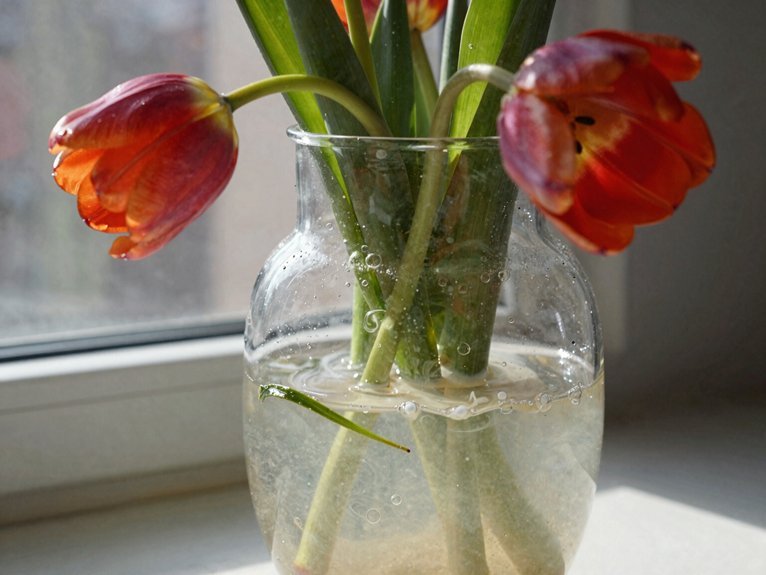
You should change your vase water immediately when you notice it turning cloudy or catching a whiff of something funky, because those are clear signals that bacteria have already started throwing a party in your bouquet. Don’t wait for a schedule, just trust your eyes and nose; they’re your best tools here.
Quick action saves your flowers from suffocating in their own stem gunk, so grab that vase and get to work.
Cloudy Water Clarity
Cloudy water almost always means trouble’s already brewing in your vase, so don’t wait to act when you spot that murky tint. That dull film signals bacterial growth multiplying fast in your stems, blocking water uptake and dooming your blooms early.
You need immediate vase water changes the moment water clarity fails: dump it, scrub the vase, and refill with room-temperature water plus fresh flower food. If you see cloudiness, check below the surface too; snip off any slimy stem ends and strip leaves that drop under the waterline. They’re mold magnets.
Daily vase water changes beat strict schedules in summer heat. You’ll keep water clarity longer and extend your arrangement’s life well past its expected date.
Cloudy water almost always means trouble’s already brewing in your vase, so don’t wait to act when you spot that murky tint. That dull film signals bacterial growth multiplying fast in your stems, blocking water uptake and dooming your blooms early.
You need immediate vase water changes the moment water clarity fails: dump it, scrub the vase, and refill with room-temperature water plus fresh flower food. If you see cloudiness, check below the surface too; snip off any slimy stem ends and strip leaves that drop under the waterline. They’re mold magnets.
Daily vase water changes beat strict schedules in summer heat. You’ll keep water clarity longer and extend your arrangement’s life well past its expected date.
Odor Detection Alert
What’s that funky smell hitting your nose when you walk past your bouquet? That odor means bacteria have taken over, and you need a water change right now. Don’t wait: cloudy water and bad smells signal that microbes are multiplying fast, stealing freshness from your stems.
You should swap out vase water every couple of days, or daily for big arrangements and hot weather. When you detect that sour stink, dump everything, scrub the vase, and remove any slimy leaves below the waterline. Refill with fresh water and add floral preservative to fight bacteria and restore nutrients.
Check levels daily, topping off as needed, especially when it’s warm. Your flowers stay perky longer when you act fast at the first whiff of trouble.
How to Change Flower Water Step by Step
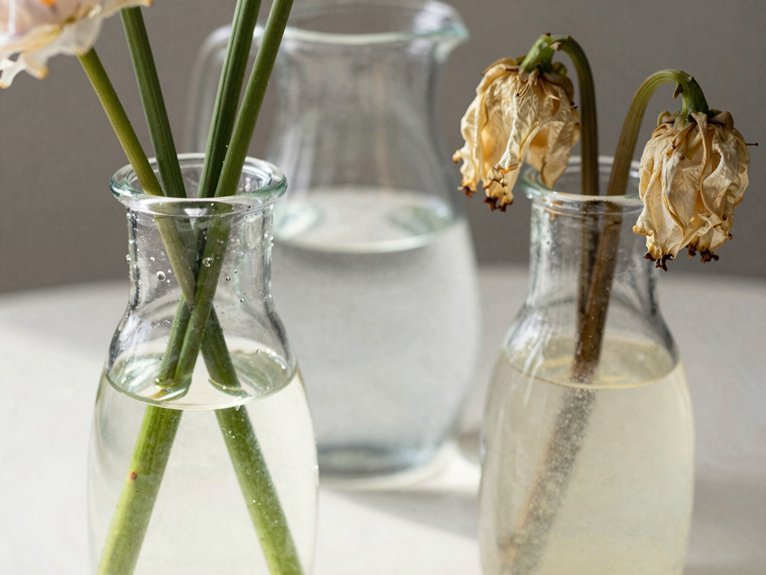
Why let bacteria steal another day from your bouquet? Grab your vase and let’s change that water now.
Stop bacteria in its tracks—refresh your vase water today and give your blooms the clean drink they deserve.
First, dump the old water completely. Rinse the vase with warm water to wash away slime. Now trim each stem diagonally; this opens fresh pathways for drinking.
Fill with clean, room-temperature water and mix in floral preservative, following the package exactly. Submerge all stems fully so nothing dries out. Check for submerged leaves and pull off any that look tired or moldy; they rot fast and ruin freshness.
If you spot cloudiness or catch a funky smell, don’t wait; change the water immediately. This daily habit keeps your blooms perky and extends their beauty.
Hot Weather and Big Bouquets Need More Frequent Changes
Now that you’ve got the basics down, let’s talk about when your flowers need extra attention. Hot weather accelerates bacterial growth and evaporation, so you’ll need daily water changes to keep blooms fresh. Large bouquets consume nutrients faster and generate more waste, demanding the same frequent attention.
Together, these factors shorten vase life dramatically if you slack off. Skip the every-couple-days routine when temperatures climb or your arrangement overflows the vase. Cloudy water or funky smells mean you’re already behind, so change it immediately, no exceptions. Your flowers won’t forgive lazy maintenance.
Treat daily refreshes as non-negotiable during summer heat or when you’ve got a massive display. Consistent water changes beat any miracle additive for keeping cut flowers alive and thriving.
Should You Make Flower Food or Buy It?
How do you decide between mixing your own flower food and grabbing a packet at the store? Store-bought floral preservative offers consistency: it fights bacteria growth, feeds your stems, and keeps water clear between water changes. You’ll follow simple instructions and trust the chemistry.
DIY appeals to your hands-on side, but skip the sugar-water shortcuts. They actually fuel bacteria growth and shorten bloom life. If you’re mixing your own, replicate commercial flower food with citric acid, bleach, and sugar in precise ratios.
Commercial packets win for reliability and convenience, especially when you’re busy. DIY works if you enjoy experimenting and measure carefully. Either way, pair your choice with regular water changes and clean cuts. Your blooms stay vibrant longer when you commit to the routine, not just the recipe.
How to Keep Flowers Alive When You Skip a Water Change
Sometimes life gets busy and you miss a water change, so you’ll need quick emergency hydration methods to revive thirsty stems before they wilt beyond saving. You can also take damage control steps like trimming ends and removing spent blooms to buy yourself extra time until you get fresh water.
These stopgap measures won’t replace proper care, but they’ll keep your arrangement alive when you’re running behind.
Emergency Hydration Methods
You’ve forgotten to swap out that vase water, and your blooms are starting to droop, so what do you do now? First, don’t panic. Emergency hydration can buy you time until proper water changes happen.
Grab a clean container and briefly submerge the entire flower heads and stems in room-temperature water for two to three minutes. This rapid rehydration pushes moisture directly into wilted petals and stems. Alternatively, mist your flowers heavily with a spray bottle, focusing on the undersides of leaves and petals where absorption happens fastest.
These quick fixes counteract bacterial growth that’s been multiplying in stale water, extending vase life by several hours. Remember, emergency hydration is only a temporary rescue. You’ll still need to perform full water changes with floral preservative to truly restore your arrangement’s health and maximize longevity.
Damage Control Steps
Although skipping a water change isn’t ideal, you can still rescue your blooms with quick damage control before bacteria take over completely.
First, dump that cloudy water immediately; it is a breeding ground for bacterial growth. Snip off any slimy stems with a diagonal cut, and strip away mouldy leaves below the waterline. Refill with fresh water and add floral preservative exactly as the package directs; this stuff fights bacteria and feeds your flowers.
For big arrangements or thirsty varieties, step up your hydration monitoring and perform extra water changes to keep stems fully submerged. You have got about a day to fix this before permanent damage sets in, so move fast and get back on schedule.